
| 陆军科技 | 海军科技 | 空军科技 | 电子与工业 |
|---|---|---|---|
|
「无」 |
「无」 |
「无」 |
| 陆军学说 | 海军学说 | 空军学说 |
|---|---|---|
|
|
「无」 |
原页面:Northeastern Army
The  东北军 is a Chinese warlord state in northern China with a population of 16.39 M. It borders
 晋系 to the east,
 中国 to the southeast, the
 川系 to the south,
 青马(马家军) to the west, and
 甘马(马家军),
 宁马(马家军), as well as the
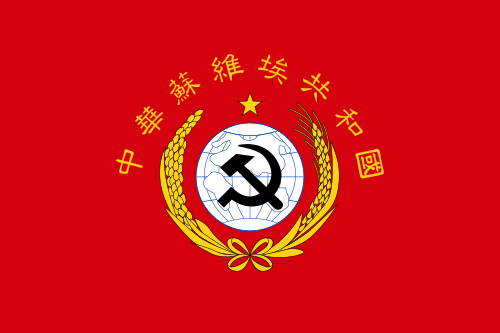 中华苏维埃共和国, to the north.
The Northeastern Army, also known as the Fengtian Army, was a Chinese army that existed from 1911 to 1937. General Zhang Zuolin developed it as an independent fighting force during the Warlord Era. He used the army to control Northeastern China (Manchuria) and intervene in national politics. During the mid-1920s the Northeastern Army was the dominant military force in China, but in 1928 it was defeated by the Kuomintang's National Revolutionary Army (NRA) during the Northern Expedition. At the end of that campaign, Zhang Zuolin was assassinated and succeeded by his son Zhang Xueliang. When Xueliang subsequently pledged loyalty to the Kuomintang, the Northeastern Army became part of the NRA and was officially rechristened the "Northeastern Border Defense Force".
In October 1935, the Chinese Communists (CCP) arrived in Gansu and Ningxia following the Long March. The Northeastern Army was tasked with finishing off the Communists with the help of the forces of local Warlord Yang Hucheng, forming the Northwest Bandit Suppression Force. Promised an easy victory, the Bandit Suppression Force was surprised and dismayed when the Red Army defeated it in two engagements in September and October. The men, already frustrated by this diversion from fighting Japan, began to lose their will to fight when POWs returned with stories of good treatment and the message that the Communists wanted to form an alliance against the Japanese. With the help of Communist-sympathetic officers, they pressed Zhang and Yang to negotiate a truce. The generals were open to the idea and invited official CCP representatives to begin negotiations in late 1935. The Red Army followed up on their promise to fight the Japanese by launching the "eastern expedition" from February to April 1936. They announced that a detachment was marching through Shanxi to fight the Japanese in Rehe and Hubei. Letting the Red Army through would have broken the encirclement, so Yan Xishan stopped them by force. Although defeated militarily, the Red Army convinced the Shanxi peasantry of their patriotism and gained 8,000 new recruits on their retreat. Zhang Xueliang was likewise impressed. When Mao announced on 14 March that the Communists were willing to conclude a formal truce, Zhang secretly agreed. By June 1936, the secret agreement between Zhang and the CCP had been successfully settled. He also proposed to Chiang Kai-shek that he reverse policy of "first internal pacification, then external resistance", and focus on military preparation against Japan. When Chiang refused, Zhang began to plot a coup in "great secrecy".
In November 1936, Zhang asked Chiang to come to Xi'an to raise the morale of troops unwilling to fight the Communists. When he arrived, Northeastern soldiers overwhelmed his bodyguard and placed him under house arrest. A faction of the army led by Yang Hucheng and the radical young officers of the "Anti-Japanese Comrade Society" wanted to execute Chiang, but Zhang and the Communists insisted that he be kept alive and convinced to change his policy towards Japan and the Communists. They argued that an alliance with Chiang was their best chance to combat the Japanese, while killing him would only provoke retaliation from the Nanjing Government. The Northeastern Army attempted to broadcast 8 demands to the Chinese public explaining why they arrested Chiang and the conditions for his release, but Nationalist censorship prevented their publication outside the Communist-held areas. Nonetheless, Chiang eventually agreed to negotiate with CCP diplomats Zhou Enlai and Lin Boqu. By late December Chiang had given a verbal promise that he would end the civil war and resist Japanese aggression.
Chiang was released on 26 December and returned to Nanjing with Zhang Xueliang. Although he announced a cease fire in the civil war, he repudiated any promises that he had made in Xi'an. Zhang was imprisoned and charged with treason. Chiang then sent 37 army divisions north to surround the Northeastern Army and force them to stand down. The army was deeply divided on the appropriate response. Yang Hucheng and the Anti-Japanese Comrade Society wanted to stand and fight if the KMT army attacked, and refuse to negotiate until Zhang was released. The Communist representatives strongly disagreed and cautioned that civil war would, in the words of Zhou Enlai, "make China into another Spain". Negotiations between the CCP and Nanjing continued. However, when a conference of Northeastern officers in January 1937 overwhelmingly resolved not to surrender peacefully, the CCP reluctantly decided that they could not abandon their allies and pledged to fight alongside them if the KMT attacked. The situation was again reversed when the five most senior Northeastern generals met separately and decided to surrender. The radical officers were enraged and assassinated one of the generals on 2 February, but this only turned the majority of the soldiers against the plan to stand and fight. The Northeastern Army peacefully surrendered to advancing KMT forces and was divided into new units, which were sent to Hebei, Hunan, and Anhui. Yang Hucheng, however, was arrested and eventually executed, while the leaders of the Anti-Japanese Comrade Society defected to the Red Army. Zhang was kept under house arrest for over 50 years before emigrating to Hawaii in 1993. Chiang did eventually keep his promise to the CCP. After six months of continued negotiations, he signed a formal agreement creating the Second United Front, a military alliance of the Communists and Nationalists against Japan.
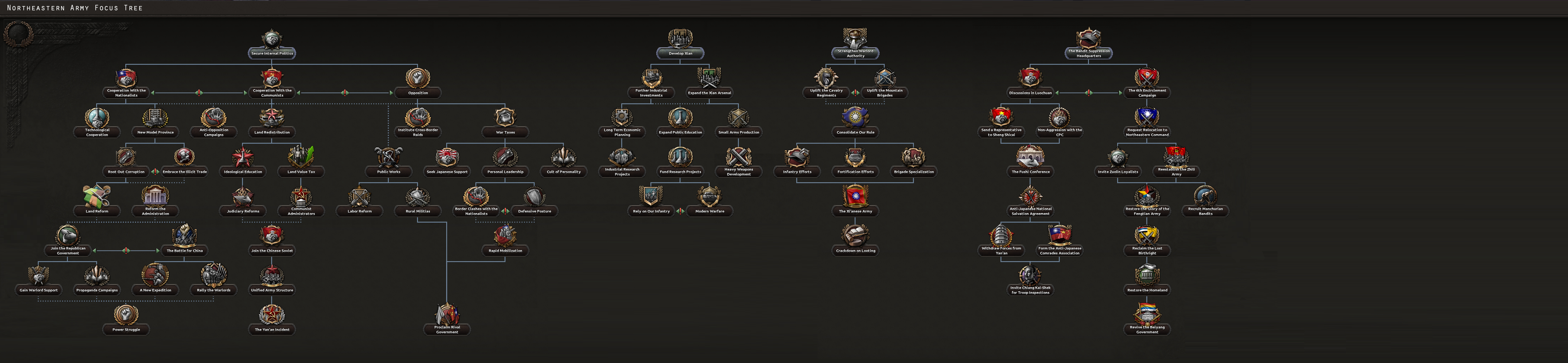
The 东北军 uses the shared Warlords national focus tree along with the other warlords, along with a unique branch only available to the Northeastern Army. It also gets access to the new shared Nationalist和共产主义 focus trees for the warlords at the end of the tree.
The Northeastern Army national focus tree can be divided into 2 branches and 3 sub-branches and 1 country specific branch:
国民党中国结盟。这会把当前国策树替换为国民党军阀国策树。Nationalist和中国共产党、与二者对立的政府,并根据政党支持度给予其国民党军阀国策树或中国共产党军阀国策树。 Warlord State,并为该国的骑兵或山地兵提供加成。
The Bandit Suppression Headquarters Branch 东北军. It is split into two paths, the leftmost path improves relations with the 中华苏维埃共和国和 新疆 to pressure 中国 to form a United Front against
 日本. It may spark the Xi'an Incident. The rightmost path declares war against the 中华苏维埃共和国, request Chiang Kai-Shek to relocate to
 冀察 and restore the Fengtian Clique. It allows the conquest of old Fengtian territory and ultimately leads to war for control over China and gives the country the Nationalist Chinese Warlord national focus tree.
东北军 开局拥有以下国家精神:
东北军开局拥有 2 个可用科研槽;另有 3 个可通过国策树解锁。
| 陆军科技 | 海军科技 | 空军科技 | 电子与工业 |
|---|---|---|---|
|
「无」 |
「无」 |
「无」 |
| 陆军学说 | 海军学说 | 空军学说 |
|---|---|---|
|
|
「无」 |
| 陆军科技 | 海军科技 | 空军科技 | 电子与工业 |
|---|---|---|---|
|
「无」 |
「无」 |
「无」 |
| 陆军学说 | 海军学说 | 空军学说 |
|---|---|---|
|
|
「无」 |
东北军 为各种科技与装备设有一些独特名称,列于此处。请注意,通用名称不在此列。
| 类型 | 1918 | 1936 | 1939 | 1942 |
|---|---|---|---|---|
| 步兵装备 | 八八式 | 二四式 | 青岛 MP18 | ZB vz.26 |
东北军 拥有 3 个州。
| 州 | 城市 | 
|
地形(省份数) | 区域 | 
|
|---|---|---|---|---|---|
| 甘肃 | Lanzhou Tianshui |
3 1 |
 沙漠 (1)  丘陵 (3)  山地 (6) |
乡村区 | 2,705,400 |
| 西安 | Xi'an | 1 | 丘陵 (2)山地 (7) 平原 (1)  城市 (1) |
发达乡村区 | 9,000,000 |
| 延安 | 延安 | 3 | 丘陵 (2)山地 (4)
|
发达乡村区 | 4,670,800 |
The 东北军's starting political parties.
| 同上 | 政党名称 | 支持率 | 领袖 | Ruling |
|---|---|---|---|---|

|
中国民主同盟(民盟) | 0% | 通用 | 
|

|
中国共产党(中共) | 0% | 通用 |
|

|
蓝衣社(BSS) | 0% | 通用 |
|

|
Kuomintang | 100% | 张学良 | 
|
备注: The Northeastern Army does not exist in the 1939 start and cannot be released.
| 意识形态 | 肖像 | 名称 | 党派 | 特质 | 效果 | 可用 |
|---|---|---|---|---|---|---|
社会主义 |
|
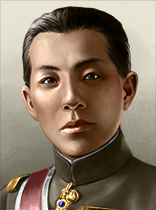
张学良 | 中国民主同盟 | 年轻的元帅 |
|
在完成国策「确保内部政治」之后 |
反修正主义 |
中国共产党 | |||||
雷克斯主义 |
蓝衣社 | |||||
Despotism |
Kuomintang | 起始领袖 |
Possible country names for the 东北军.
| 同上 | 国家名称 | Condition |
|---|---|---|
|
西安共和国 | |
|
西安苏维埃共和国 | |
|
Shaanxi Province | 中国共产党附属国 |
|
西安自由邦 | |
|
东北军 | |
 |
Northeast and Shaanxi Army |  军阀附属国 |
|
Shaanxi Province |  一体化军阀附属国 |
东北军 的部长与军事幕僚。
| 肖像 | 名称 | 特质 | 效果 | 要求 | ( ) 花费 |
|---|---|---|---|---|---|

|
随机 | 筑垒工程师 | – | 150 | |

|
随机 | 工业巨头 | – | 150 | |

|
随机 | 军工实业家 | – | 150 | |

|
随机 | 共产主义革命者 |
|
150 | |

|
随机 | 民主改革者 |
|
150 | |

|
随机 | 法西斯煽动家 |
|
150 |
| 肖像 | 名称 | 特质 | 效果 | 要求 | () 花费 |
|---|---|---|---|---|---|

|
随机 | 军事理论家 |
|
– | 50 |

|
随机 | 空战理论家 |
|
– | 50 |

|
随机 | 海军理论家 |
|
– | 50 |
| 肖像 | 名称 | 特质 | 效果 | 要求 | () 花费 |
|---|---|---|---|---|---|
|
|
随机 | 陆军防御(专精) |
|
– | 50 |

|
随机 | 陆军进攻(专精) |
|
– | 50 |
| 肖像 | 名称 | 特质 | 效果 | 要求 | () 花费 |
|---|---|---|---|---|---|

|
随机 | 决战(专精) |
|
– | 50 |
| 肖像 | 名称 | 特质 | 效果 | 要求 | () 花费 |
|---|---|---|---|---|---|

|
随机 | 地面支援(专家) |
|
– | 100 |
| 肖像 | 名称 | 特质 | 效果 | 要求 | () 花费 |
|---|---|---|---|---|---|
|
|
随机 | 火炮(专精) |
|
– | 50 |

|
随机 | 舰队后勤(专精) |
|
– | 50 |
|
|
随机 | 反潜(专精) |
|
– | 50 |
|
|
随机 | 陆军后勤(专精) |
|
– | 50 |
|
|
随机 | 空战训练(专家) |
|
– | 100 |
| 肖像 | 名称 |  技能 |
 攻击 |
 防御 |
 计划 |
 后勤 |
特质 | 要求 |
|---|---|---|---|---|---|---|---|---|
|
|
张学良 | 3 | 3 | 3 | 2 | 2 |
| 肖像 | 名称 | 技能 |
攻击 |
防御 |
计划 |
后勤 |
特质 | 要求 |
|---|---|---|---|---|---|---|---|---|
|
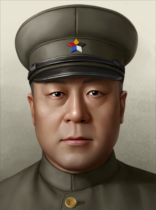
Yu Zhishan | 2 | 2 | 1 | 3 | 1 |  组织者 |
已完成焦点Invite Zuolin Loyalists
|
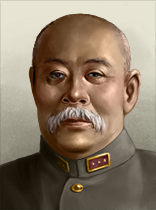
|
Zhang Haipeng | 2 | 2 | 2 | 1 | 2 | 已完成焦点Invite Zuolin Loyalists
| |
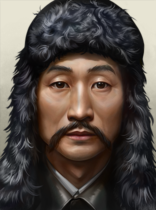
|
Ma Zhanshan | 3 | 3 | 2 | 2 | 3 |  骑兵军官组织者  游击战士 |
已完成焦点Invite Zuolin Loyalists
|
| 标志 | 名称 | 类型 | 效果 | 要求 | 花费()
|
DLC |
|---|---|---|---|---|---|---|

|
矿业委员会 | 资源开发公司 |
|
|
25 | |

|
鞍山钢铁厂 | 工业财团 |
|
显示条件:
|
150 | |

|
西部炼油厂 | 炼油财团 |
|
150 | ||

|
南京无线电厂 | 电子学财团 |
|
|
150 | 
|

|
中苏资源调查 | 炼油财团 | 150 | |||

|
上海电子 | 电子学财团 |
|
|
150 |
|

|
上海电力公司 | 能源供应公司 |
|
|
150 |
|

|
中国银行 | 垄断银行 |
|
|
150 |
|

|
永利化学工业 | 炼油财团 |
|
150 |
|
东北军 的设计公司。
| 标志 | 名称 | 类型 | 效果与条件 | () 花费 |
|---|---|---|---|---|

|
中德技术代表团 | 重型坦克设计商 |
选择此设计公司后,只要它仍在受雇,就会永久影响其受雇期间研究的所有装备的性能。 |
150 |

|
莫罗佐夫设计局 | 机动坦克设计商 |
选择此设计公司后,只要它仍在受雇,就会永久影响其受雇期间研究的所有装备的性能。
|
150 |
| 标志 | 名称 | 类型 | 效果与条件 | () 花费 |
|---|---|---|---|---|

|
江南造船集团 | 近海防御舰队设计商 |
|
150 |
|
|
大沽造船厂 | 袭击舰队设计商 |
|
150 |
| 标志 | 名称 | 类型 | 效果与条件 | () 花费 |
|---|---|---|---|---|

|
CAMCO | 中型飞机设计商 |
选择此设计公司后,只要它仍在受雇,就会永久影响其受雇期间研究的所有装备的性能。
|
150 |
|
|
CAMCO - 战斗机部 | 中型飞机设计商 |
选择此设计公司后,只要它仍在受雇,就会永久影响其受雇期间研究的所有装备的性能。
|
150 |
|
|
CAMCO - 轰炸机部 | 中型飞机设计商 |
选择此设计公司后,只要它仍在受雇,就会永久影响其受雇期间研究的所有装备的性能。
|
150 |
| 标志 | 名称 | 类型 | 效果与条件 | () 花费 |
|---|---|---|---|---|

|
太原兵工厂 | 火炮设计商 |
|
150 |

|
辽宁兵工厂 | 摩托化装备设计商 |
|
150 |

|
汉阳兵工厂 | 步兵装备设计商 |
|
150 |

|
奉天兵工厂 | 步兵装备设计商 |
|
150 |
东北军 可使用这些军工产业组织
| 标志 | 名称 | 类型 | 受影响装备 | 初始特质 | 要求 |
|---|---|---|---|---|---|
|
|
中德技术代表团 | 重型坦克设计商 | 所有重型坦克 |
|
|
|
|
莫罗佐夫设计局 | 快速坦克设计师 | 装甲科技 |
|
|
| 标志 | 名称 | 类型 | 受影响装备 | 初始特质 | 要求 |
|---|---|---|---|---|---|
|
|
江南造船集团 | 特遣舰队造船厂 | 所有航空母舰 所有巡洋舰 所有驱逐舰 |
|
|
|
|
大沽造船厂 | 袭击舰队 | 主力舰 屏卫舰 潜艇 |
|
|
| 标志 | 名称 | 类型 | 受影响装备 | 初始特质 | 要求 |
|---|---|---|---|---|---|
|
|
CAMCO | 多用途战术飞机 | 所有中型机 运输机 |
|
|
|
|
CAMCO - 战斗机部 | 轻型飞机设计商 | 战斗机与舰载战斗机 近距离空中支援 舰载近距离空中支援 |
|
|
|
|
CAMCO - 轰炸机部 | 近距离空中支援飞机设计师 | 近距离空中支援 舰载近距离空中支援 |
|
|
| 标志 | 名称 | 类型 | 受影响装备 | 初始特质 | 要求 |
|---|---|---|---|---|---|
|
|
太原兵工厂 | 火炮制造商 | 牵引式火炮 牵引式反坦克炮 牵引式防空炮 牵引式火箭炮 |
|
|
|
|
辽宁兵工厂 | 汽车制造商 | 卡车 机械化装备 摩托化火箭炮 |
|
|
|
|
汉阳兵工厂 | 步兵武器制造商 | 步兵装备 |
|
|
|
|
奉天兵工厂 | 步兵武器制造商 | 步兵装备 |
|
|
| 征兵法案 | 贸易法案 | 经济法令 |
|---|---|---|
 仅志愿兵役
|
 出口导向
|
 民用经济
|
 年份 |
 军用工厂 |
 海军船坞 |
 民用工厂 |
 建筑槽位 |
|---|---|---|---|---|
| 1936 | 2 | 0 | 3 (-1) | 10 |
*红色 中的数字表示生产消费品所需的民用工厂数量,依据经济法案以及军用与民用工厂总数向上取整。
年份 |
 石油 |
 铝 |
 橡胶 |
 钨 |
 钢铁 |
 铬 |
 煤 |
|---|---|---|---|---|---|---|---|
| 1936 | 0 | 0 | 0 | 1 | 3 (-1) | 0 | 0 |
*这些数字表示游戏开始一小时后可用的资源量。红色 中的数字表示因贸易法案而留作出口的资源量。
| 类型 | # 1936 | # 1939 | |
|---|---|---|---|
 |
步兵 | 13 | 0 |
 |
骑兵 | 4 | 0 |
 |
师总数 | 17 | 0 |
 |
已用人力 | 98.00K | 0 |
| 师 | 名称列表 | # 1936 | # 1939 | 支援连 | 战斗营 |
|---|---|---|---|---|---|
 三角军* |
步兵单位 | 13 | 0 | 6x
| |
 骑兵军* |
骑兵单位 | 4 | 0 | 5x
| |
| * 标记在 1939 年开局中已被移除的师。 | |||||
The 东北军 has no navy.
东北军没有空军。
 以下是one of many玩家为东北军建议的战略。请记住,由于游戏的动态特性,其他玩家的情况可能会有所不同。
Northeastern Army, starts in a pretty rugged terrain, faced with a dilema on continuing of hunting down the communists, as previous efforts in the past had been proven futile, historically. Or, concede territory in order to propose an alliance with China and Communist China to stand against the Japanese invaders. As it was done historically.
The Northeastern Army, whether it wins or losses to the communists, it can be relocate to Hebei-Chahar and restore the Fengtian Clique. But, that would be an extra trouble should the Northeastern Army fight its way to not only restore the Clique itself but form the Beiyang government that they were loyal to. In that regard, it is better to finish the job and never let the communists stay alive.
Knowing that it is wasteful to build and invest in industry, start improving a bit of infrastructure, small arms and trade for steel to increase and make the gun producing properly. And relocate the army to the capital, as the border cores with communist china is mountainous, the army is barely equipped and is 50% green. You can consolidate the 17 divisions, yes, but that depends on the player to pick the choice. However, keeping more numbers against the Communist Chinese may prove as a better leverage for you. In meantime, use the limited time to train and have some decent standing for the army, considering the goal is to relocate as soon as possible. In terms of focuses, use military bonuses to improve and better the army and command.
Once the 6th Encirclement Campaign is played out, let the communist army walk out on the territory, as the strategy that follows will be to flank their forces, pin them down and destroy the divisions. The communist army should have been successfully lured in Yan'an and heading towards the capital. Use a couple of divisions to pin them in place and the rest of them to walk around to capture the victory points. Use pinning attacks, and just bypassing their troops all over the parts of the front. The initial difficulty lies by getting past the enemy units, if there is any left behind. If not, then it is good news, thus it makes the capturing the targeted tiles way easier. It is tedious but worth to overcome the trouble. With the capitulation in order, annex them immediately. And so, it takes care of the long term problem.
With the communists dealt for good, take the Request Relocation to Northeastern Command focus which becomes available. With Chiang's approval, the Northeastern Army is rebranded as The New Fengtian Clique. It annexes Hebei-Chahar and inherits their troops, generals and gains their cores. But at the same time, Northeastern Army(Now as The New Fengtian Clique) losses its own cores and the captured Communist Chinese cores to China. Fortunately, you can get to keep the army.
Now, as The New Fengtian Clique it can freely take the Industrial focuses freely without fearing any event of being transferred elsewhere, again. Build a proper economy, taking the mentioned focuses and manually applying the construction stats. Depending on whatever path Japan takes, The New Fengtian Clique has to take down and annex Manchukuo. If Japan has abandoned their ambitions for now, it is better to strike fast against Manchukuo and annex them. Otherwise, if Japan is determined to fight with China, then the New Fengtian Clique has to join the United Front and finally face the Japanese.
日本必将宣战,因此蒙疆与满洲国会加入战斗。就此而言,最好以防御方式重组军队,而不要拉成一条长线,并把部队放在长城能提供更好属性的地块上。显然,日本军队会去夺取其余核心,但最好让北平(首都)保持防御。日本军队会有兴趣向中国更深处推进。面对这种可能,向东河北推进以限制他们的补给,并在机会出现时使它成为你的核心。该战线的目标是向北推进,夺取蒙疆与满洲国。要当心海军登陆,因为日本在中国水域拥有完全主导权。务必在维持对日本及其傀儡的左右两面的同时保护沿海地块。用两方面各几个师向上推进,以限制蒙疆与满洲国之间的通路。与此同时左面其余部分推进,并与统一战线成员合作粉碎日本入侵师。
By pushing and prodding attacks against Mengjiang should push them into an early capitulation. As now the focus rests between Japan and Manchukuo. Divide the army to contribute to clean the Japanese invasions in Mainland China and to finish the Manchurian campaign up north. Push the invading forces up to Korea, until everything else in Central China has been liberated too. With the White peace on the way, The New Fengtian Clique wins Mengjiang and Manchukuo territories along with East Hebei and Dalian. If Japan decides to not attack for the second time, then The New Fengtian Clique should rebuild and expand its economy and army in order to reunite all of China.


| 亚洲 |
|
| 中国军阀 |
| 中东 |
| 亚洲 |
|
| 中东 |
|
| 苏联 |
|
| 印度土邦 |
|
| 印度尼西亚土邦 |
|
 稳定度:
































 阿伊努共和国
 Brunei
 柬埔寨
 占婆共和国
 Champasak
 虾夷共和国
 Korea

 Laos
 Maldives
 巴基斯坦
 Ryukyu
 新加坡
 Sabah
 Sarawak
 斯里兰卡
 Taiwan
 Vietnam
 Assyria
 巴林
 Israel
 库尔德斯坦
 阿曼伊玛目国
 卡塔尔
 南阿拉伯
 特鲁西尔诸邦
 Altai
 亚美尼亚
 阿塞拜疆
 布哈拉
 Buryatia
 楚科奇
 Evenkia
 远东共和国
 佐治亚
 Karakalpakstan
 Kazakhstan
 哈卡斯
 希瓦
 Kyrgyzstan
 Ostyakia-Vogulia
 Sakha
 Tajikistan
 Taymyria
 Turkmenistan
 Uzbekistan
 符拉迪沃斯托克
 Yamalia
 Balochistan
 Bangladesh
 中印度诸邦
 海得拉巴
 卡拉特
 克什米尔
 卡利斯坦
 科拉普尔与德干诸邦
 马德拉斯诸邦
 曼尼普尔
 迈索尔
 西北边境
 Rajputana
 锡金
 Sindh
 西印度诸邦
 Aceh
 Bali
 Gowa
 Pontianak
 Siak
 Ternate
 Timor-Leste
 西巴布亚